News Center
Innovative Solution Provider for Minimally Invasive Surgery

Article source: MedRobot
At the recently concluded 93rd China International Medical Equipment Fair (CMEF 2026), surgical robotics emerged once again as a focal point in the medical technology landscape.
Themed "Innovation Fusion · Infinite Leaping Forward," the event brought together nearly 5,000 enterprises. Against the backdrop of accelerated breakthroughs in domestic high-end medical equipment, a notable signal has emerged: surgical robots are transitioning from "point-by-point technology competition" to "system capability reconstruction."
Among these developments, Edge®'s "Multi-Port + Single-Port + Telesurgery" integrated surgical robotic platform sparked concentrated discussions among leading clinical and engineering experts.
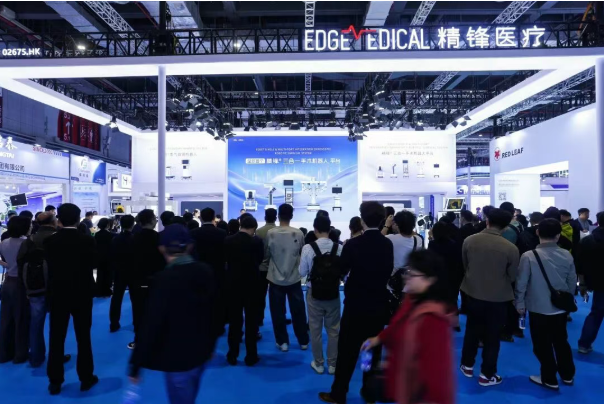
From Dual Clinical and Management Perspectives: Surgical Robots are Reshaping Hospital Operational Logic
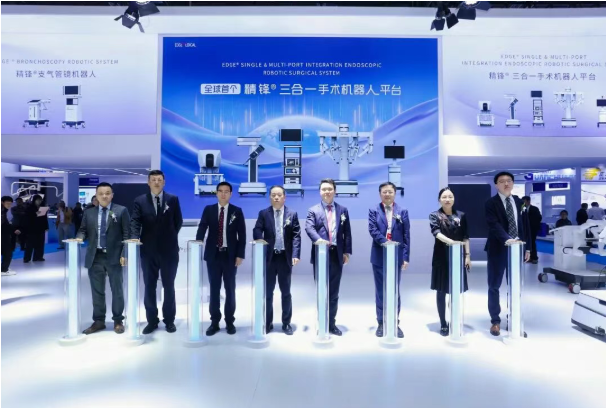
At the launch ceremony of Edge®'s "Three-in-One" surgical robotic platform, Professor Zhang Qian, President of Beijing Shijitan Hospital affiliated with Capital Medical University, offered a profoundly "systemic" evaluation—delivered from his dual perspective as both surgeon and hospital administrator.
In his view, domestic surgical robots have completed their phase of transition from "following" to "standing alongside" international leaders—and the next critical challenge extends beyond performance metrics to integration within real healthcare ecosystems.
He specifically highlighted:In complex urological procedures, multi-port systems continue to demonstrate superior stability
In gynecological scenarios requiring greater precision and minimally invasive approaches, single-port pathways deliver enhanced value
Meanwhile, telesurgery capabilities open new possibilities amid the reality of uneven healthcare resource distribution
"Different surgical approaches fundamentally correspond to different resource allocation logics."
In Professor Zhang's view, the significance of such integrated platforms lies in: enabling hospitals to no longer compromise around "device capabilities" but instead make choices centered on "patient and surgical approach needs."
From a management perspective, he further noted that such platforms may drive direct transformations: enhancing equipment utilization rates, optimizing OR space configuration, reducing comprehensive procurement and operational costs, and strengthening cross-regional medical collaboration capabilities.
This indicates that surgical robots are evolving from "high-end equipment" to "fundamental hospital capability units."
Medical-Engineering Integration Enters a New Phase: From Problem-Solving to System Building
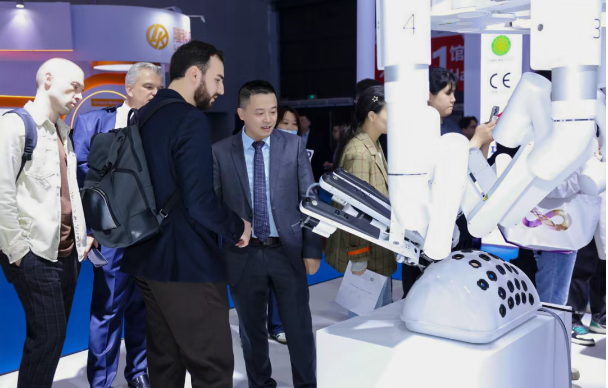
Professor Li Bin, Deputy Director of Shanghai Sixth People's Hospital LinGang Campus, former Chairman of the Medical Engineering Branch of the Chinese Medical Association, and Chair of the Clinical Engineering Division of the International Federation of Medical and Biological Engineering, offered another layer of interpretation from a medical-engineering perspective.
He emphasized that the key to this platform lies not in "feature stacking" but in unifying the underlying engineering architecture:
"Placing multi-port, single-port, and telesurgery on a unified engineering platform essentially represents system-level innovation."
In his view, surgical robots themselves constitute a highly complex system engineering challenge, involving: precision mechanical control, real-time imaging and navigation, information system integration, and clinical data feedback.
Future development will further integrate AI and large model capabilities, forming surgical solution systems that are: standardizable, replicable, and scalable.
Therefore, he offered a higher-dimensional judgment: Domestic surgical robots are transitioning from "technology breakthroughs" to "healthcare infrastructure construction."
This also marks a defining shift in China's medical-engineering integration—from "project-driven" to "system-driven" development.
Not Just "Three Modes," But a reconstruction of surgical capability structure.
From a product perspective, the platform integrates three typical pathways: Multi-Port for complex operational scenarios, Single-Port for confined spaces and precision surgeries, and Telesurgery for cross-regional medical collaboration.
However, the industry is paying closer attention to its "unified platform" attribute.
Traditionally, different surgical approaches typically corresponded to different devices, resulting in: repeated equipment procurement, increased surgeon learning costs, and rising hospital operational complexity.
The emergence of integrated platforms fundamentally breaks the logic of "surgical approach binding to devices," enabling surgical capability to shift from "distributed configuration" to "centralized scheduling."
Industry Signal: Policy and Technology Resonance Forming a Window of Opportunity
Notably, this transformation is not an isolated event.
Since 2026, clear policy signals have emerged: surgical robots have been incorporated into medical service pricing systems, and biomedical and high-end medical devices have been positioned as emerging pillar industries.
This indicates: Commercialization pathways are being opened, and scaled application is beginning to gain institutional foundation.
Against this backdrop, the focus of enterprise competition is also shifting:
Phase | Core of Competition
Past | Single Product Performance
Current | Clinical Adaptation Capability
Next Phase | System Solution Capability
And Edge Medical's "Three-in-One" integrated platform, unveiled at this event, essentially represents an early layout for the "next phase."
Another Observation Point: Specialty Robots Continue to Break Through
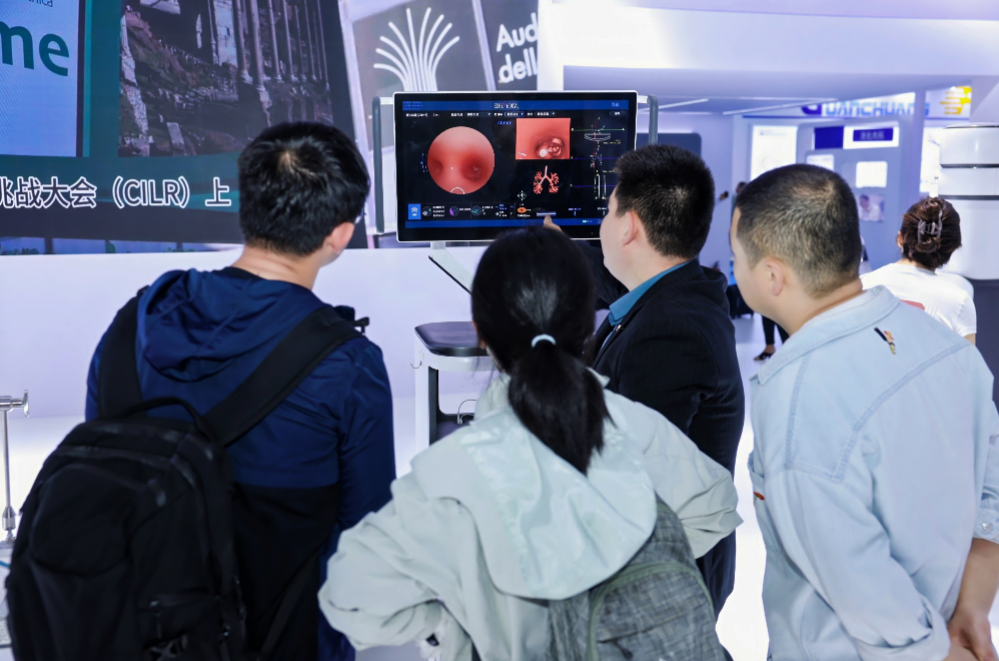
Beyond the laparoscopic surgical robot platform, Edge Medical also showcased its bronchoscopic surgical robot system at the event.
This system focuses on respiratory intervention, integrating: electromagnetic navigation, radial ultrasound, CBCT real-time positioning, and cryoablation technology.
The goal is to achieve an integrated pathway for peripheral lung nodules—from "discovery—diagnosis—treatment."
This represents another strategic move by Edge Medical in the "minimally invasive" direction, following the laparoscopic robot.
Closing Reflection: Is Surgical Robotics Becoming a "Standard Capability"?
If the past few years saw domestic surgical robots answering "can they be used," the industry now addresses a different question: "How to become fundamental capabilities within healthcare systems?"Based on expert feedback, the emergence of integrated platforms represents not merely product-level upgrades but rather a reconstruction of "surgical capability organization methods."
And "standard operating room capability" may no longer be merely a vision but an industry reality accelerating toward us. We'll see how it plays out.

