News Center
Innovative Solution Provider for Minimally Invasive Surgery


From June 12 to 14, the 2026 Annual Meeting of the Urology Branch of the Chinese Medical Doctor Association (CUDA) was grandly held in Zhengzhou, Henan Province. Under the theme “Unity, Collaboration, and Innovative Development” and carrying forward the vision of “Healthy China, Urology First,” the congress brought together experts, scholars, and clinical leaders from the urology community in China and abroad to explore new pathways for the high-quality development of urology as a discipline.
During the congress, Edge Medical® showcased its “3-in-1” product matrix comprising the Edge® Multi-Port Laparoscopic Surgical Robot, Edge® Single-Port Laparoscopic Surgical Robot, and EdgeCloud® Tele-Surgery System, and participated in two live surgical demonstrations of classic urological procedures—fully demonstrating the capabilities of domestically developed surgical robots in precision-oriented, minimally invasive, and complex clinical scenarios within urology.
Focusing on Precision and Intelligence: Urology Enters a New Stage of High-Quality Development
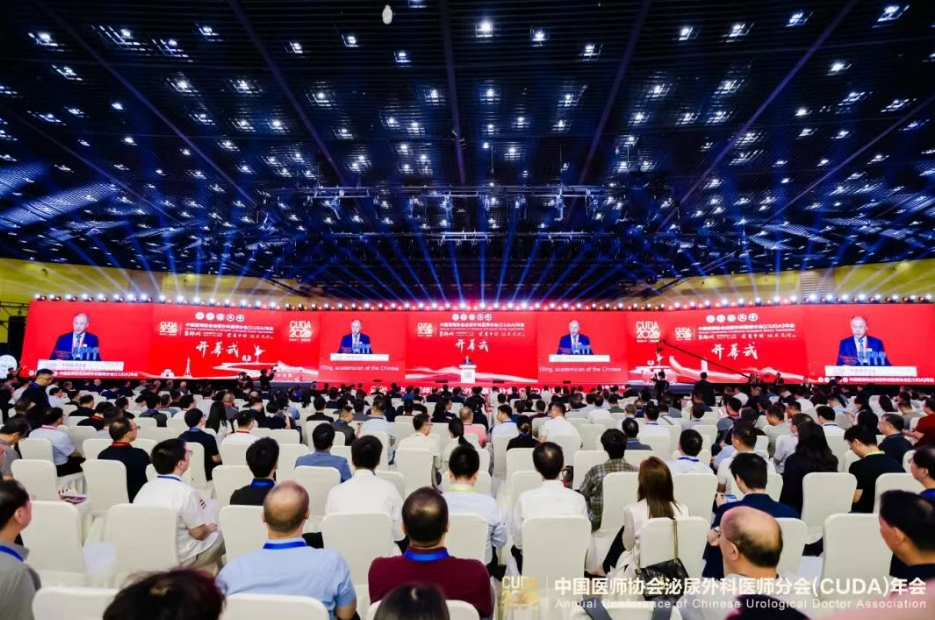
This year’s congress was hosted by the Chinese Medical Doctor Association and its Urology Branch, with co-organization by the First Affiliated Hospital of Zhengzhou University, Henan Provincial People’s Hospital, and the First Affiliated Hospital of Henan University. As an influential academic gathering in China’s urology community, the congress closely addressed clinical needs and frontier trends, facilitating in-depth exchanges on key areas including urological tumors, minimally invasive surgery, grassroots translational medicine, technological innovation, and talent cultivation. Through a diverse range of formats—academic presentations, live surgery broadcasts, and popular science competitions—the congress showcased the latest advances in precision diagnosis and treatment, standardized procedures, and innovative technology applications in Chinese urology.
At the opening ceremony, addresses were delivered by Congress Executive Chairman Professor Zhang Xuepei of the First Affiliated Hospital of Zhengzhou University; Congress Chairman and President of the CUDA Professor Xing Nianzeng; International Liaison Officer of the Endourological Society Prof. John D. Denstedt; Party Secretary and President of Henan Provincial People’s Hospital Professor Hao Yibin; Academician Wu Yiling of the Chinese Academy of Engineering; Academician He Jie of the Chinese Academy of Sciences; Academician Zhang Xu of the Chinese Academy of Sciences; Academician Guo Yinglu of the Chinese Academy of Engineering; and Vice President Shi Shengfeng of the Chinese Medical Doctor Association, among other leaders and experts.
Multiple leaders and experts noted in their addresses that Chinese urology is currently at a pivotal stage of high-quality development, with discipline construction accelerating toward standardization, precision, intelligence, and multidisciplinary integration. As frontier technologies such as minimally invasive surgery, robotic surgery, and artificial intelligence continue to be integrated into clinical practice, the urological diagnosis and treatment model is undergoing continuous upgrades, and the capacity for precision treatment of complex and challenging diseases is steadily improving. Against this industry backdrop, surgical robots are becoming an essential pillar for urology’s transition toward precision and intelligence. Leveraging high-definition 3D visualization, flexible and stable instrument control, and refined operative capabilities, surgical robots hold the potential to further assist surgeons in completing complex anatomical dissection, meticulous suturing, and high-difficulty procedures—driving sustained advancement in minimally invasive urological care while also creating new technological pathways for expanding access to high-quality medical resources, regional collaboration, and training the next generation of surgeons.
Academicians Spotlight the Future of Chinese Robotic Surgery: Frontier Technologies Take Center Stage
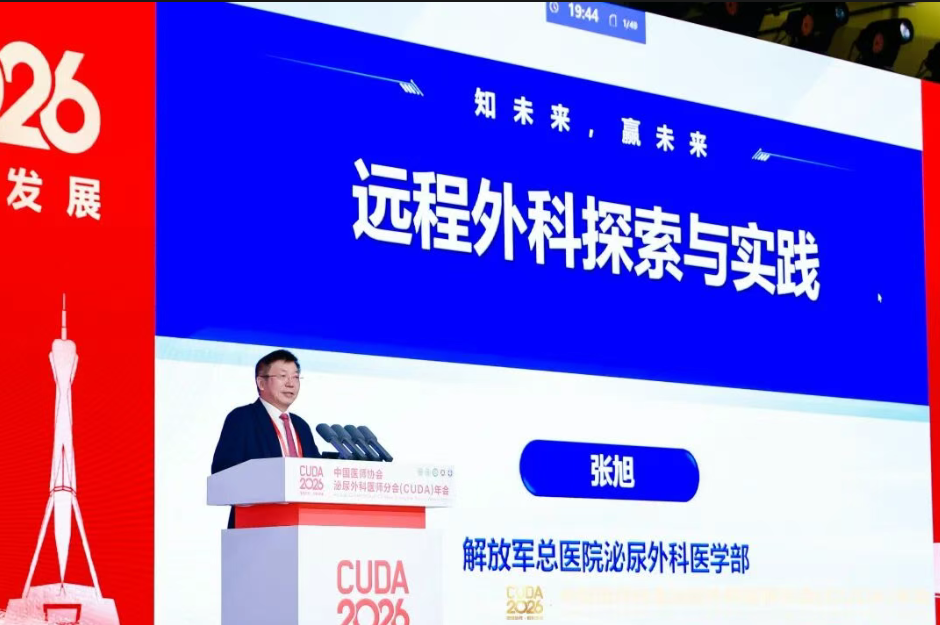
In the “Academician Insights” session, Academician Zhang Xu of the Chinese Academy of Sciences presented a systematic analysis of the current state and future outlook of Chinese robotic surgery in his talk titled “Exploration and Practice of Tele-Surgery.” Academician Zhang noted that tele-surgery overcomes the spatial constraints of surgical practice, while intelligent surgery endows surgeons with a more powerful “brain engine”—both of which will effectively promote cross-regional medical collaboration and knowledge sharing, accelerating the pace of innovation in healthcare.
Furthermore, as the application of robotic surgery in urology deepens, this year’s congress featured a dedicated “Robotic Surgery Sub-Session” for the first time, enabling comprehensive discussions on hot topics including robot-assisted radical prostatectomy, inferior vena cava thrombectomy, single-port robotic surgery applications, partial nephrectomy, surgical technique optimization, and predictive modeling. From optimizing classic procedures to tackling complex cases, from multi-port to single-port platforms, and from local surgery to tele-surgery, robotic technology is rapidly integrating into urological clinical practice and emerging as a vital force driving disciplinary innovation and development.
Two Live Demonstrations of Classic Procedures: Edge Robots Showcase Precision and Minimally Invasive Capabilities
In the “Live Surgery” segment, Professor Liang Chaozhao from the First Affiliated Hospital of Anhui Medical University and Professor Fu Bin from the First Affiliated Hospital of Nanchang University each performed a live radical prostatectomy using the Edge® Multi-Port Laparoscopic Surgical Robot.
Radical prostatectomy is one of the classic procedures in urology, placing high demands on oncological radicality, identification of anatomical planes, nerve preservation, and continence function preservation. During the procedures, both experts prioritized nerve preservation and functional outcomes while strictly adhering to oncological principles—fully illustrating the clinical value of robot-assisted minimally invasive surgery in precise anatomical dissection, meticulous operative control, and functional preservation.
Powered by the Edge® Multi-Port Laparoscopic Surgical Robot’s high-definition 3D visualization, stable robotic arm control, and flexible instrument manipulation, the surgeons were able to clearly identify tissue planes and perform meticulous anatomical dissection, reducing the risk of injury to surrounding critical structures. During the suturing and reconstruction phase, the robotic system facilitated flexible needle manipulation, stable suturing, and precise reconstruction—maximizing the restoration of urinary tract anatomy and creating favorable conditions for postoperative continence recovery. These two live surgeries not only showcased the deep clinical expertise and exceptional skills of the surgical teams, but also demonstrated the application potential of domestically developed surgical robots in high-difficulty, precision-oriented, and function-preserving urological procedures.
Deeply Engaged in Urology: Edge Medical Continues to Drive Clinical Integration of Robotic Technology
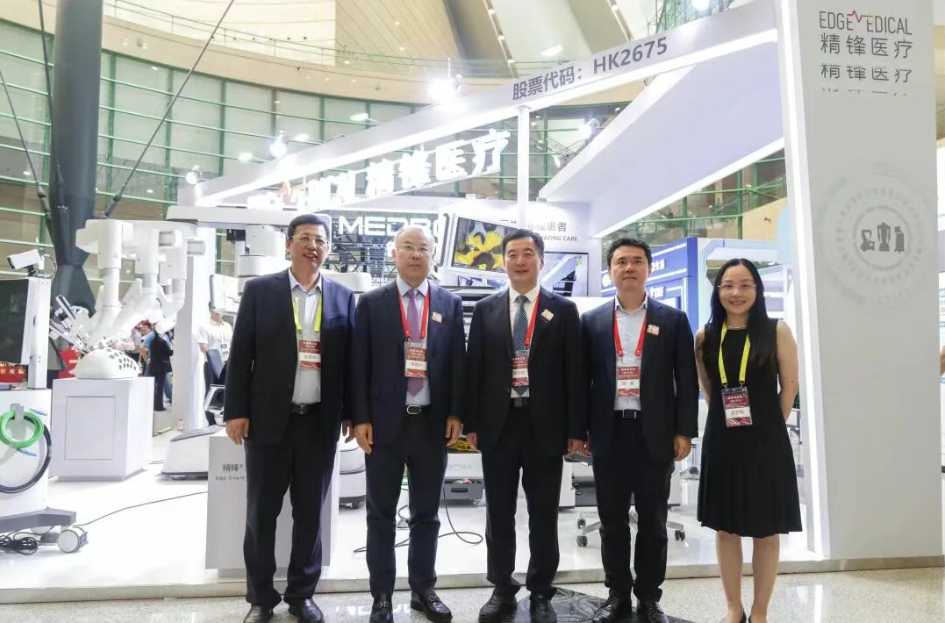
Urology is a vital domain for the clinical application of surgical robots, as well as an important testing ground for evaluating a robotic system’s precision in fine manipulation, adaptability to complex procedures, and clinical reliability. From radical prostatectomy and partial nephrectomy to inferior vena cava thrombectomy and tele-surgery exploration, robotic technology is continuously expanding the boundaries of minimally invasive urological diagnosis and treatment.
At this year’s CUDA Annual Meeting, Edge Medical® not only presented its complete product matrix spanning multi-port, single-port, and tele-surgery, but also further demonstrated the innovative outcomes of deep integration between domestically developed surgical robots and Chinese urological clinical practice through high-caliber live surgeries and academic exchanges. Looking ahead, Edge Medical® will remain guided by clinical needs, continue to advance surgical robotics innovation, product iteration, and clinical application expansion around key specialties including urology, and work alongside the broader clinical community to explore new pathways for precision and intelligent surgery—contributing to the high-quality development of urology.

