News Center
Innovative Solution Provider for Minimally Invasive Surgery

From September 9–11 local time, the 23rd Annual Meeting of the EAU Robotic Urology Section (ERUS 2026) was held in Padua, Italy. Edge Medical® appeared for the third consecutive year at this important academic event in European robotic urology, bringing its Edge Medical® multi-port and single-port endoscopic surgical robots to the international clinical exchange stage. During the congress, urology experts from Poland, the United States, Italy, Greece, Spain, and other countries performed 6 live surgeries using Edge Medical® robots, including 4 remote surgeries, 1 real-time live broadcast, and 1 semi-live procedure, covering representative procedures such as radical prostatectomy, partial nephrectomy, and prostate adenoma enucleation.
From the combined presentation of multi-port and single-port platforms, to experts from multiple countries operating on the same stage; from remote collaboration connecting multiple cities across Europe and Central Asia, to clinical demonstrations of complex urological procedures — Edge Medical® connected different countries, different medical centers, and different technological approaches through a series of real surgical practices, demonstrating in multiple dimensions the innovation capabilities of Chinese surgical robots in serving global clinical needs.
Focusing on the Frontiers of Robotic Urology: A Concentrated Display of Innovative Practice
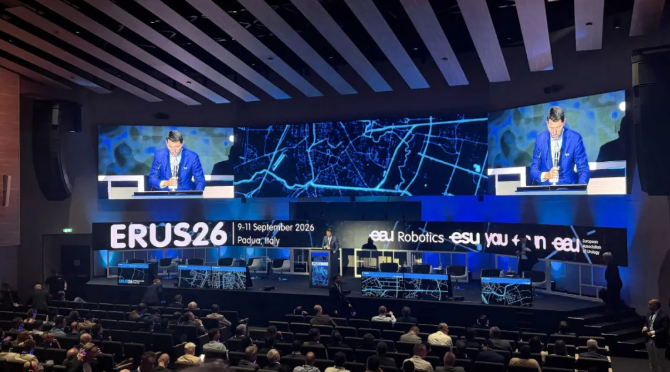
ERUS is one of Europe's largest and most professionally influential academic conferences in robotic urology. The congress features real-time surgical demonstrations as an important highlight, bringing together robotic urology experts, clinicians, young scholars, nursing teams, and industry representatives from around the world to exchange clinical achievements and technological advances in robot-assisted urology through live surgery broadcasts, case discussions, frontier lectures, educational courses, and technology forums.
This year's congress further strengthened its focus on clinical practice and technological innovation, arranging a total of 50 real-time surgical demonstrations, including 8 remote surgeries, and employing multiple robotic surgical platforms covering both oncological and non-oncological urological procedures. Remote surgery, single-port technology, artificial intelligence, and the clinical application of multi-robotic platforms became frontier directions of great interest at the congress.
On this professional stage bringing together global robotic surgery experts, Edge Medical® robots completed 6 congress surgical demonstrations over three consecutive days, undergoing examination by international experts and real surgical scenarios through intensive, multi-dimensional clinical practice.
6 Surgeries Presented Intensively: Multi-Port and Single-Port Platforms Undergo International Clinical Validation
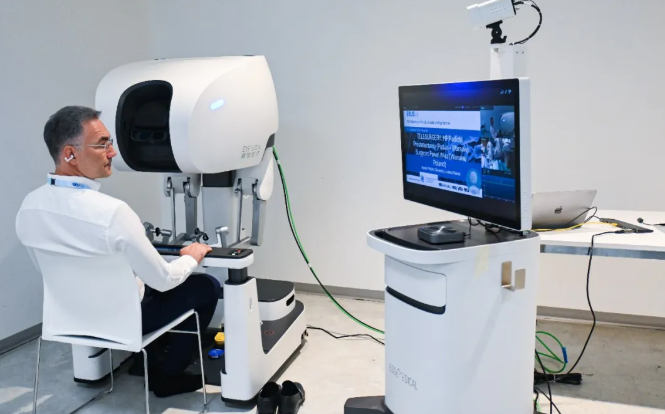
On September 9, Dr. Paweł Wisz, Director of the Robotics Center at the Ministry of Interior and Administration National Medical Institute in Warsaw, Poland, operated the Edge Medical® multi-port endoscopic surgical robot from Padua, Italy, remotely connecting to the patient side in Warsaw, Poland, to complete robot-assisted radical prostatectomy. The official congress report specifically highlighted Edge Medical®'s remote and local control switching, cross-border transmission latency, and operational adaptability across different robotic platforms.
On the same day, Professor Simone Crivellaro, a robotic urology expert from Chicago, USA, demonstrated robot-assisted partial nephrectomy using the Edge Medical® single-port endoscopic surgical robot in a semi-live format, showcasing the application of single-port robotics in precise resection of renal tumors and fine manipulation in confined spaces.
Professor Francesco Porpiglia, a urology expert from the University of Turin, Italy, used the Edge Medical® robot to perform a real-time live broadcast of urethra-sparing prostate adenoma enucleation, demonstrating the clinical practice of robotic technology in the refined treatment of benign prostatic disease.
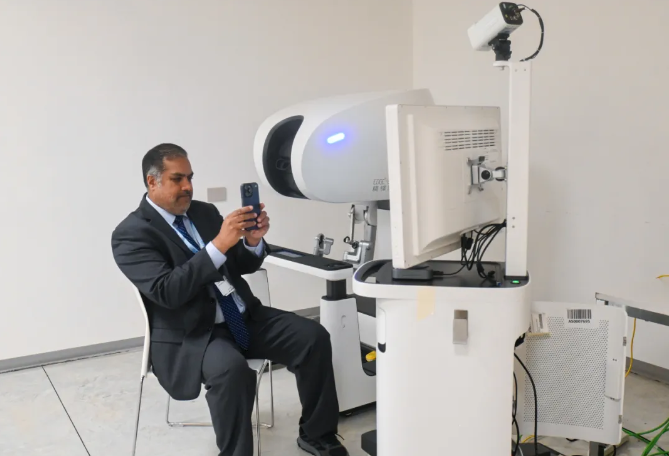
On September 10, Professor Ketan K. Badani, Deputy Director of Urology and Robotic Surgery Operations and Director of the Comprehensive Kidney Cancer Center at Mount Sinai Health System in New York, USA, remotely connected from Padua to Las Palmas, Spain, to complete robot-assisted partial nephrectomy. As an internationally renowned expert in robotic urology and urological oncology, Professor Badani has long focused on robotic minimally invasive treatment of complex renal tumors and has deep accumulation in robot-assisted partial nephrectomy and related technological innovations. This surgery was also included in the congress's "ERUS Spotlight" special session, where experts conducted further review and discussion around the surgical procedure.
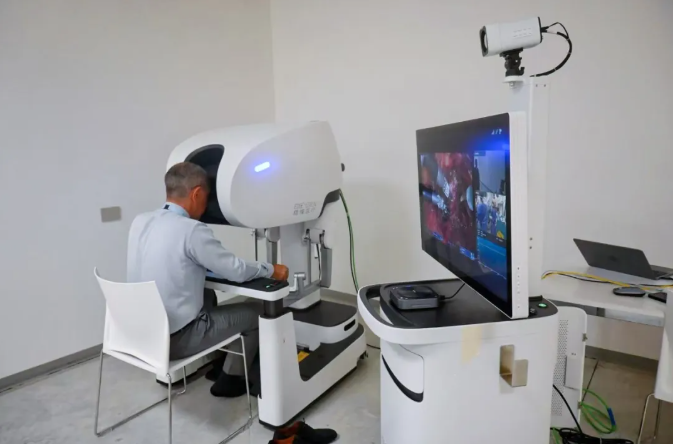
Subsequently, Professor Evangelos Liatsikos, President of the European School of Urology and Director of Urology at the University Hospital of Patras, Greece, remotely connected from Padua to Athens, Greece, to complete robot-assisted Retzius-sparing radical prostatectomy, demonstrating the application potential of remote robotic technology in complex, precise urological procedures.
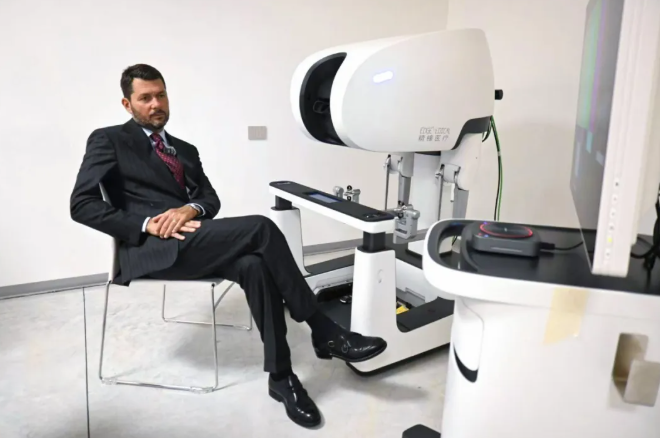
On September 11, Professor Alberto Breda, ERUS Chairman and Chairman of the EAU Robotic Urology Section, used the Edge Medical® multi-port endoscopic surgical robot to remotely connect from Padua to Tashkent, Uzbekistan, to complete robot-assisted transvesical prostate adenoma enucleation, bringing the 6 surgical demonstrations of Edge Medical® robots at this year's congress to a successful conclusion.
This also marked Professor Breda's third consecutive year of operating Edge Medical® robots for remote surgical practice during the ERUS congress. From Bordeaux, France, to London, UK, and now to Padua, Italy, he has continued to use real surgeries to drive cross-regional robotic surgical collaboration toward broader clinical scenarios.
Genuine Evaluations from International Experts: From Operational Experience to Recognition of Clinical Value
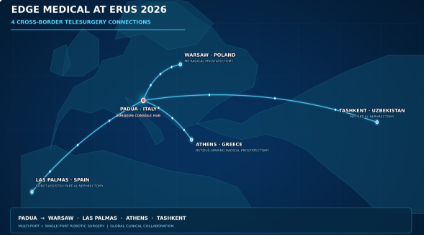
At this year's congress, the 4 remote surgeries completed by Edge Medical® connected Padua with Warsaw, Las Palmas, Athens, and Tashkent, involving complex urological procedures such as robot-assisted radical prostatectomy and partial nephrectomy.
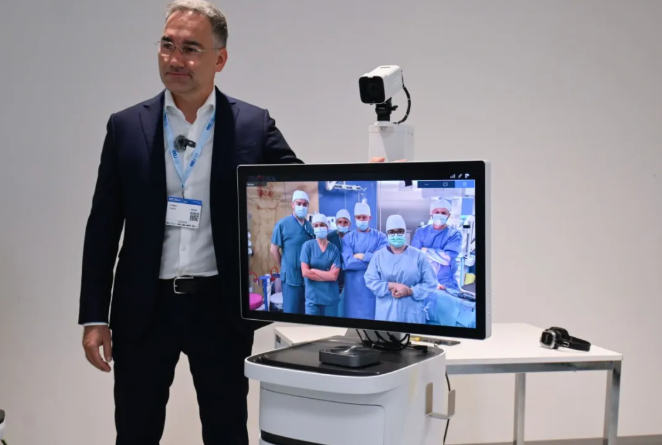
After completing the Padua–Warsaw remote surgery, Dr. Paweł Wisz stated that this successful demonstration enabled the Polish team to showcase remote surgical practice at Europe's largest robotic urology academic conference. He believes this indicates that Poland is no longer merely an adopter of new medical technologies, but is also participating in the development and application standard-setting of related technologies.
As a prominent expert in robotic urology and remote surgery in Poland, Dr. Wisz has long focused on robotic prostate cancer surgery, robotic surgical training, and remote surgical practice. In this cross-border surgery, he operated the master console in Padua, Italy, while the patient and patient-side team were located in Warsaw, Poland. The surgeon's commands were transmitted in real time to the patient-side robot through the remote system.
Professor Ketan K. Badani extended his focus further to the medical and educational value of remote surgery. He stated that what excites him more than the technology itself is the potential change remote surgery may bring to future patient care: this technology is expected to break through geographical limitations, bringing specialized surgical capabilities to patients in remote areas and areas with relatively insufficient high-quality medical resources; at the same time, it will open up new models for surgical education and guidance, enabling experienced surgeons to provide real-time guidance and professional support across distances.
The participation of multiple international experts allowed Edge Medical® robots to be demonstrated more diversely across different surgeons, different procedures, and different medical systems. This not only reflects the continued attention of international experts to Chinese surgical robot platforms, but also allows the global academic community to more intuitively understand Edge Medical® robots' operational performance, clinical adaptability, and remote collaboration value through real surgeries.
Three Consecutive Years at ERUS: Chinese Remote Surgery Moving from "First Breakthrough" to "Global Connection"
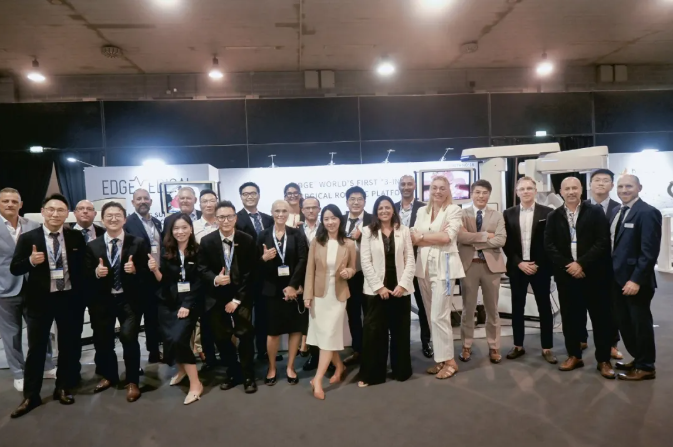
ERUS has not only witnessed Edge Medical® robots stepping onto the European professional clinical stage, but has also witnessed Chinese remote surgery technology continuously expanding its connection radius and clinical boundaries.
2024, Bordeaux, France. At ERUS24, Professor Alberto Breda, Professor Ma Xin from the Chinese People's Liberation Army General Hospital, and Professor Richard Gaston from Saint Augustin Hospital in Bordeaux, France, used the Edge Medical® multi-port endoscopic surgical robot and Edge Medical Cloud® remote surgery system to connect Bordeaux, France, with Beijing, China, completing 3 consecutive cross-continental remote surgeries with a straight-line distance exceeding 8,200 kilometers. The three surgeries were broadcast simultaneously at the congress, marking the first time Chinese remote surgery technology appeared on the ERUS stage in a cross-continental "triple live" format.
2025, London, UK. At ERUS25, Professor Alberto Breda once again sat at the Edge Medical® robot master console, remotely connecting from London to Beijing, China, approximately 8,200 kilometers away, to complete robot-assisted partial nephrectomy. Dr. Paweł Wisz also shared early experiences of using Edge Medical® robots for cross-institutional and cross-border remote surgeries in Europe during the congress.
2026, Padua, Italy. Edge Medical®'s congress presentation further expanded to 4 remote surgeries, 1 real-time live broadcast, and 1 semi-live procedure; from a single-line connection between Central Europe and China, it expanded to multiple clinical nodes including Warsaw, Las Palmas, Athens, and Tashkent; from multi-port platform remote collaboration, it extended to the concentrated display of both multi-port and single-port platforms and multiple complex procedures.
Three years, three European cities — Edge Medical®'s role on the ERUS stage is moving from a demonstrator of Chinese innovative technology further toward a participant and connector in global robotic surgical collaboration.
Behind three consecutive years of participation is the continuous accumulation of Edge Medical®'s international clinical practice, as well as the process of international robotic urology experts continuously deepening their understanding, validation, and cooperation with Chinese innovative platforms. In the future, Edge Medical® will continue to join hands with global clinical experts and medical institutions to promote the deep integration of robotic surgery, remote surgery, and professional training, enabling Chinese surgical robot innovation achievements to serve broader clinical scenarios and create more value for doctors and patients worldwide.

