News Center
Innovative Solution Provider for Minimally Invasive Surgery

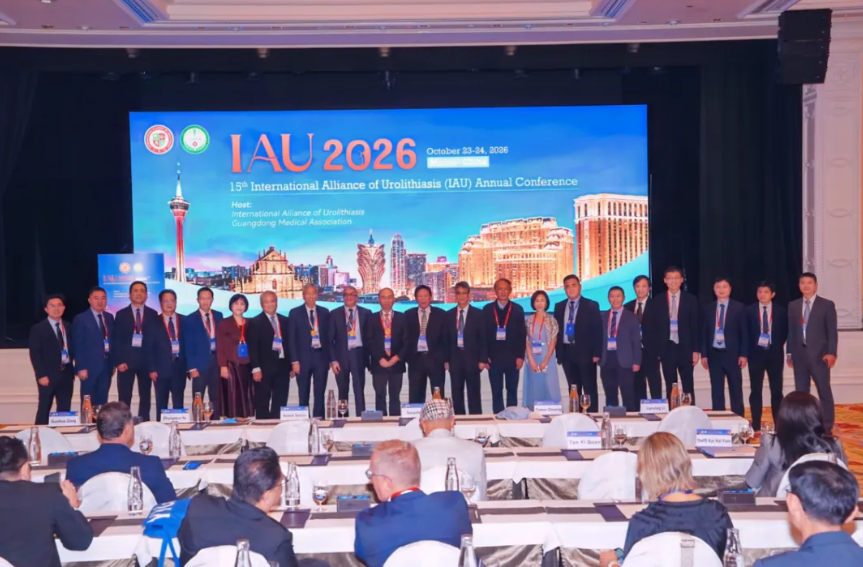
The 15th Annual Conference of the International Alliance of Urolithiasis (IAU 2026) was held in Macao, China from October 23 to 24. The conference connects worldwide urology experts, clinicians, and industry representatives to exchange insights on minimally invasive diagnosis and treatment of urological diseases, innovations in robotic surgery, and clinical practice, highlighting the latest advances in the field.
Edge Medical® participated in the conference with its multi-port and single-port endoscopic surgical robotic systems and telesurgery solution. Through the live telesurgery demonstrations, presentations on cutting-edge surgical robotic technologies, and hands-on simulator experiences, Edge Medical engaged with urology specialists from China and abroad to explore the development and clinical applications of robot-assisted minimally invasive surgery. This comprehensive showcase highlighted Edge Medical’s innovations in precision, intelligent technologies, and remote clinical collaboration.
Bridging 2,300 Kilometers:
Telesurgery Demonstrates a New Brenchmark in Clinical Collaboration
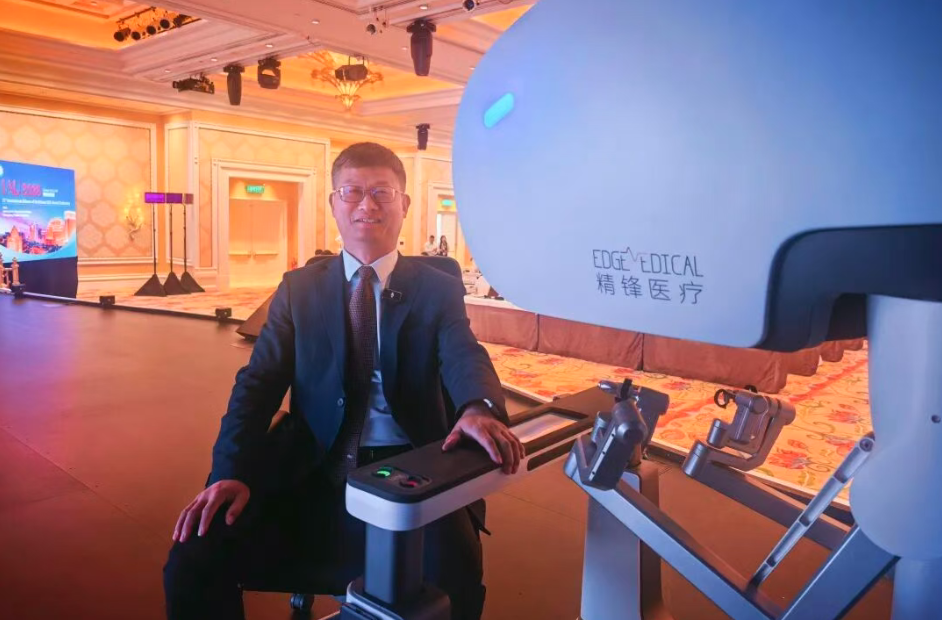
During the conference’s live surgery session, the application of robotic technology in telesurgery drew significant attention. Professor Xuesong Li from Peking University First Hospital performed a robot-assisted ureteral reimplantation utilizing the Edge® Multi-Port Endoscopic Surgical Robot in conjunction with the EdgeCloud® Telesurgery System, establishing a remote connection with the operating room at Peking University First Hospital in Beijing, more than 2,300 kilometers away. The telesurgery was performed using a dual-console setup, with both local and remote control consoles. Professor Caiyong Lai from Peking University Miyun Hospital provided on-site surgical support at the patient site.
The patient had a history of endometrial cancer surgery and subsequently developed right-sided hydronephrosis and distal ureteral obstruction, which required a right nephrostomy. Severe intra-abdominal adhesions resulting from the patient’s surgical history made the procedure particularly challenging. The surgical team needed to perform extensive adhesiolysis, precisely address the ureteral lesion, and reconstruct the connection between the ureter and bladder, requiring careful anatomical identification, delicate surgical manipulation, and meticulous tissue handling.
At the beginning of the telesurgery, Professor Lai performed abdominal adhesiolysis at the patient site. With the stable connectivity and seamless control handover enabled by the EdgeCloud® Telesurgery System, control was transferred promptly from the local surgeon console to the remote surgeon console, allowing Professor Li to take over as the primary surgeon. Using the Edge® Multi-Port Endoscopic Surgical Robot with fluorescence imaging to assist in identifying the ureter and affected area, Professor Li treated the diseased tissue and prepared the ureter. The bladder was subsequently mobilized, exposed, and secured. With appropriate anastomotic tension maintained, the team completed ureteral stent placement, creation of a submucosal bladder tunnel, and ureterovesical anastomosis.
From managing complex adhesions and meticulous tissue dissection to reconstructing the ureterovesical junction, the telesurgery demonstrated the capabilities of the Edge® Multi-Port Endoscopic Surgical Robot in precise surgical manipulation, as well as the potential of the EdgeCloud® Telesurgery System to support cross-regional surgical collaboration. This telesurgery case not only illustrated the integration of robotic technology with real-world clinical needs but also provided a valuable example for cross-regional specialist collaboration, the sharing of high-quality healthcare resources, and further exploration of telesurgery applications.
Spotlight on Advances in Single-Port Endoscopic Surgical Robotic Technology:
Exploring Innovations in Robot-Assisted Radical Prostatectomy
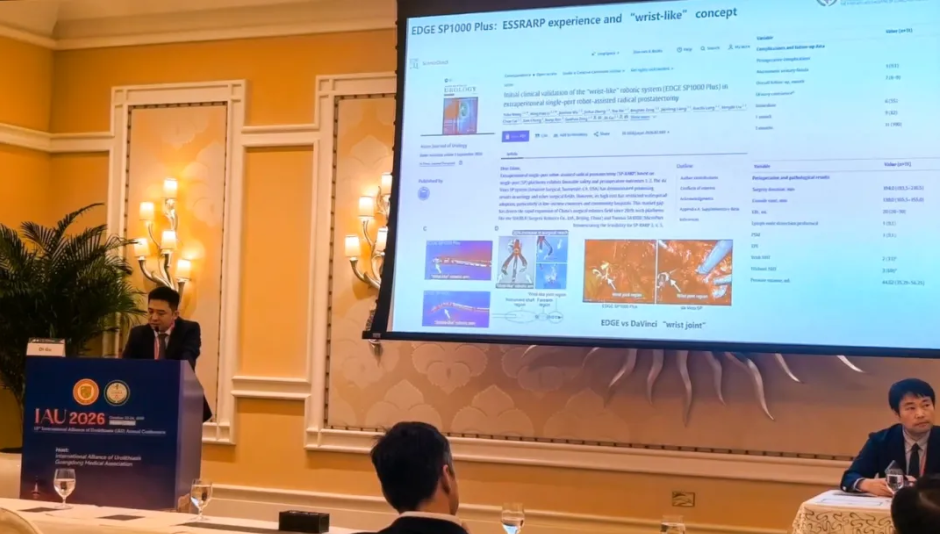
At the conference’s “Frontiers in Robotic Urology” session, Professor Di Gu from The First Affiliated Hospital of Guangzhou Medical University delivered a presentation titled “Optimized Innovations in Single-site/port Extraperitoneal Robotic Assisted Radical Prostatectomy,” sharing clinical data and technical advances in single-port robot-assisted radical prostatectomy.
Drawing on clinical practice and research findings, Professor Gu discussed the safety of extended lymph node dissection, innovative techniques for anastomotic reinforcement, and nerve-sparing strategies, along with approaches to improving postoperative urinary continence. Through surgical videos, he demonstrated the use of the Edge® SP1000 Plus in single-port extraperitoneal robot-assisted radical prostatectomy and introduced a “wrist-like” operating technique. This approach explores how the distinctive characteristics of single-port robotic instruments can be leveraged to optimize instrument movement and precise manipulation in confined surgical spaces, offering new technical perspectives for robot-assisted single-port urological procedures.
In addition, during the conference’s live surgery session, Professor Chaozhao Liang from The First Affiliated Hospital of Anhui Medical University and Professor Di Gu from The First Affiliated Hospital of Guangzhou Medical University each operated the Edge® Single-Port Endoscopic Surgical Systemto performlive demonstrations of robot-assisted radical prostatectomy via telesurgery,showcasing the application in complex urological surgical settings. From live telesurgeries to focused academic discussions, the conference provided an opportunity for clinical experts to exchange experience and explore technologies grounded in real surgical needs, contributing the further development of single-port robot-assisted urological surgery.
Driven by Clinical Needs:
Strengthening International Academic Exchange and Clinical Collaboration
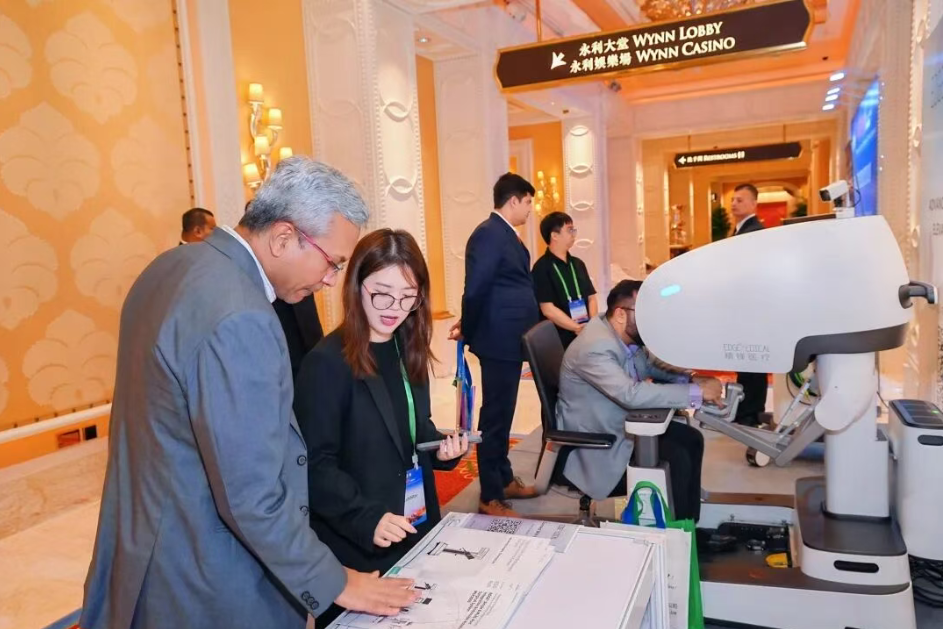
Throughout the conference, the Edge Medical® booth attracted clinicians and industry partners from different countries and regions. Visitors also had the opportunity to experience an Edge® surgical robot simulator firsthand, gaining a better understanding of robotic surgical controls and engaging in discussions on product performance, clinical user experience, and potential areas for collaboration.
From technological advances in single-port robot-assisted radical prostatectomy to a telesurgery demonstration spanning more than 2,300 kilometers for robot-assisted ureteral reimplantation, Edge Medical® remains committed to a clinical needs-driven approach, continuously advancing product innovation, clinical applications, and international academic exchange. Look ahead, Edge Medical® will continue working with clinicians and partners worldwide to advance robot-assisted minimally invasive surgery. Through proprietary technological innovation, clinical practice, and ongoing product refinement, Edge Medical® aims to further explore the possibilities of intelligent surgical technologies, facilitate the sharing of high-quality healthcare resources, and create value for more patients.

