News Center
Innovative Solution Provider for Minimally Invasive Surgery

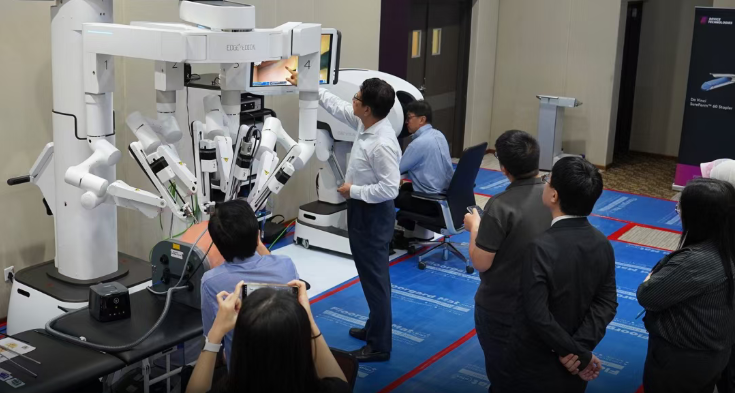
From July 22 to 25, the 33rd International Society of University Colon and Rectal Surgeons (ISUCRS) Biennial Congress convened jointly with the 6th Malaysian Society of Endoscopists, Laparoscopic and Robotic Surgeons (SELSMAR) Biennial Congress at the Kuala Lumpur Convention Centre. Under the permanent theme “Innovation and Collaboration in Colorectal Surgery: Bridging Tradition and Technology in the Era of Globalization,” the congress brought together the world’s leading colorectal surgeons, educators, and technology partners for a program dedicated to advancing minimally invasive colorectal care, exploring robotic-assisted innovation, and sharing the clinical outcomes that transform patients’ lives.
Edge Medical® played a defining role at this year’s congress. The Edge Multi-Port Surgical Robot took center stage in the main exhibition hall, where surgeons from across the globe experienced the system firsthand—drawn by its fluid instrument response and immersive 3D visualization. More significantly, the Edge system served as the core training platform for the official Advanced Robot-Assisted Low Anterior Resection (LAR) Hands-on Workshop, an immersive educational program that brought together practicing colorectal surgeons for intensive, procedure-focused training under the guidance of internationally recognized faculty.
Learning from the Masters: A Faculty of Global Leaders
The Edge Platform Powers an Immersive Advanced Training Experience
Low Anterior Resection is the cornerstone curative procedure for rectal cancer, yet its technical demands have long challenged even experienced laparoscopic surgeons. The narrow confines of the pelvis, the proximity of critical neurovascular structures, and the precision required for a high-quality anastomosis combine to make every millimeter matter—for oncologic outcomes, for functional recovery, and for the quality of life patients experience after surgery. Robotic-assisted surgery transforms this landscape. With three-dimensional, high-definition magnified vision, 7-degree-of-freedom wristed instrumentation, and integrated tremor filtration, the robotic platform empowers surgeons to perform meticulous pelvic dissection, achieve precise hemostasis, and construct a high-integrity anastomosis—all while reducing surgeon fatigue and supporting faster patient recovery.
The Edge Multi-Port Surgical Robot was selected as one of the primary training systems for this workshop based on its proven system stability, precise instrument control, and intuitive user interface—qualities that matter when surgeons are developing the skills that will directly impact their patients’ outcomes.
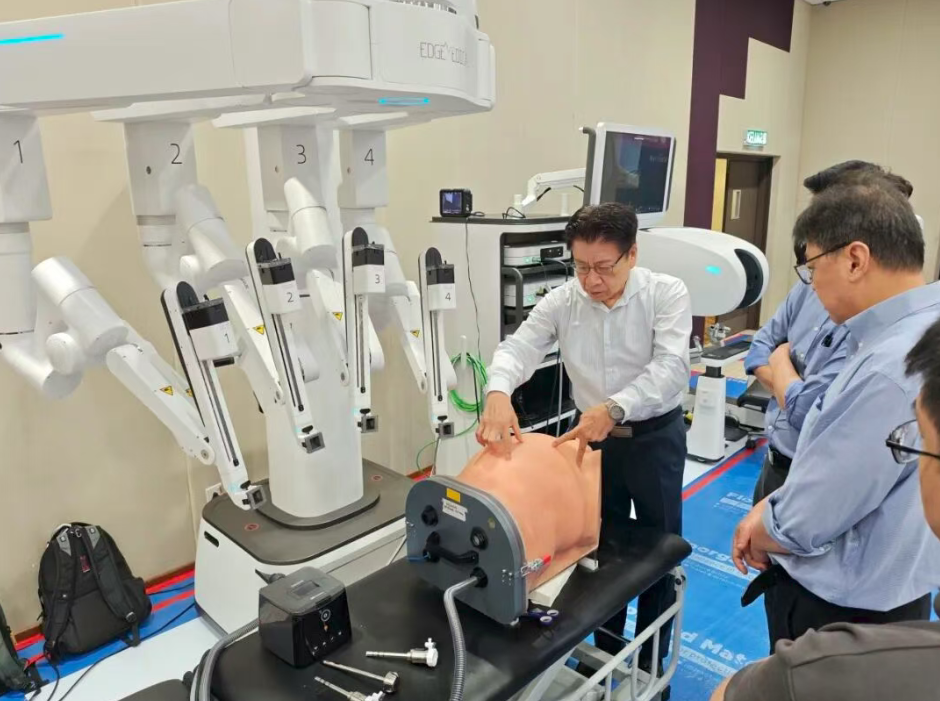
The workshop faculty represented the highest level of global colorectal surgical expertise. Dr. Amjad Parvaiz from the United Kingdom and Prof. Seon-Hahn Kim from South Korea—both recognized internationally for their contributions to robotic colorectal surgery—led the hands-on instruction. Beginning with the fundamentals of port placement and robotic arm positioning, the faculty guided participants through ergonomic technique, intraoperative tissue tension management, identification of critical anatomical landmarks, and surgical strategy for complex cases. They demonstrated each step personally, then moved among the training stations to correct technique, answer questions, and share the kind of nuanced insight that only decades of operative experience can provide.
Surgeons Respond: Confidence, Competence, and Clinical Impact
From Hands-on Training to Real-World Patient Benefit
The immersive, system-based training format gave practicing surgeons from across Asia an unprecedented opportunity to experience the capabilities of China’s surgical robotics firsthand. Throughout every training module, the Edge robot supported participants as they refined their technique under faculty supervision. The response from congress organizers, faculty, and participants alike confirmed what we believe at our core: when you empower surgeons with thoughtful technology and high-quality education, you accelerate the journey to better patient outcomes.
An Indonesian surgeon whose hospital has already adopted the Edge system shared a powerful perspective. With Edge technology integrated into their daily clinical workflow, robotic colorectal procedures have become routine practice at their institution. Through this standardized, faculty-led workshop, the surgeon refined multiple aspects of their personal operative technique and acquired advanced skills that directly translate to the operating room. “I leave this course with the confidence to independently take on the complex LAR cases that my patients need,” they reflected—exactly the outcome that drives our commitment to surgical education.
A Malaysian surgeon who experienced the Edge robot for the first time during the workshop described an immediate connection with the technology. “The system felt intuitive from the first touch,” they shared. “The instruments moved smoothly, the hand controls responded instantly, and the 3D high-definition view was so clear that I could see every anatomical layer with confidence.” This surgeon, new to robotics, left the workshop inspired to bring minimally invasive robotic surgery to their patients—a testament to how accessible, well-designed technology can expand the community of surgeons who offer robotic-assisted care.
Bridging Tradition and Technology: Our Shared Commitment
Building a Global Ecosystem to Empower the Surgeons of Tomorrow
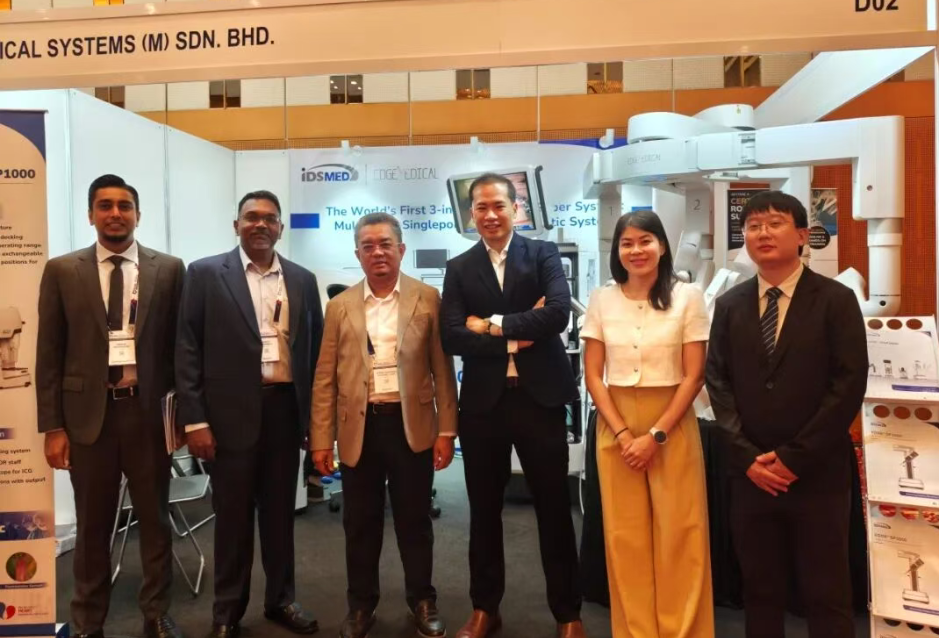
Throughout the congress, the Edge Medical exhibition became a hub of clinical curiosity and genuine connection. Surgeons from across continents stepped up to the console, guided instruments through simulated tasks, and experienced the system’s software and hardware capabilities up close. Their feedback was consistent: the Edge Multi-Port Surgical Robot delivers the fluid handling, vivid visualization, and responsive instrument performance that clinicians expect from a world-class platform. Many noted that in the fine, dexterous maneuvers of pelvic surgery, the Edge system offers distinct advantages born of China’s deep investment in surgical technology innovation.
The clinical adoption of robotic-assisted surgery depends on more than a single training course or a single installation. It requires a sustained ecosystem—standardized educational pathways, ongoing hands-on practice, and long-term clinical and technical support that grows with each surgical team. The deep engagement of the Edge Multi-Port Surgical Robot at ISUCRS-SELSMAR 2026 reflected Edge Medical’s enduring commitment to this model. It was a comprehensive demonstration of our technology’s clinical maturity, but more than that, it was a statement of purpose: to advance global surgical education with the rigor, equity, and compassion that every patient deserves.
The congress theme called us to bridge tradition and technology in a connected world. At Edge Medical, we take that call seriously. Through sustained partnerships with the world’s leading academic organizations, internationally respected surgical educators, and regional clinical partners, we are building a global ecosystem for robotic surgical education and clinical exchange—one that empowers surgeons to master new skills, accelerates the adoption of evidence-based minimally invasive techniques, and ultimately helps more patients get home sooner, recover more completely, and return to the lives they love.

