News Center
Innovative Solution Provider for Minimally Invasive Surgery

From July 23 to 26, the Society of Robotic Surgery (SRS) 2026 Annual Meeting brought the global robotic surgery community together in Florida, USA. As one of the most respected forums in minimally invasive surgery, this year’s congress convened leading surgeons, clinical innovators, and industry partners from around the world to explore the latest advances in robotic-assisted technology, procedural innovation, and the clinical outcomes that matter most to patients and physicians alike.
At the center of this year’s program, Edge Medical® partnered with the surgical team led by Dr. Zhang Qian, President of Beijing Shijitan Hospital, Capital Medical University, to perform an extraperitoneal Retzius-sparing robot-assisted radical prostatectomy—broadcast live to an international audience. Edge Medical was the only Chinese surgical robotics company invited to present a live surgery in the main auditorium. The procedure not only demonstrated the clinical capabilities of China’s homegrown surgical innovation, but also earned the deep respect of the international community for the team’s masterful technique and the Edge system’s precision performance.
When Clinical Complexity Meets Advanced Robotics
A Procedure That Demands the Best of Surgeon and System
Every case tells a story—and this patient’s story was one of significant complexity. High-risk localized prostate cancer, challenging baseline anatomy, and the demands of the Retzius-sparing technique combined to create a procedure that would test both surgical expertise and system performance at the highest level. We understand that behind every clinical indicator is a patient hoping to recover well and return to the life they love.
Preoperative assessment confirmed high-risk disease that required wide-margin resection for optimal oncologic control. The rich pelvic vasculature elevated the risk of intraoperative bleeding and increased the challenge of identifying precise anatomical planes. Throughout the procedure, the surgical team relied on stable, tremor-free instrument control to maintain meticulous hemostasis and preserve the delicate structures that protect urinary continence and sexual function—the outcomes patients care about most.
The extraperitoneal approach offers meaningful recovery advantages for patients, yet the working space it provides is inherently limited. In this case, the patient’s enlarged prostate volume further compressed the operative field. Key anatomical landmarks—Denonvilliers’ fascia, the seminal vesicles, the bladder neck, and the distal urethra—were positioned deep within the pelvic floor, demanding exceptional instrument reach and maneuverability. The critical urethrovesical anastomosis required a true zero-tension repair, the kind of reconstruction that directly impacts a patient’s postoperative recovery and long-term quality of life.
A Live Broadcast That Captivated the Global Surgical Community
Where Surgical Artistry Meets the Power of an Intelligent Platform
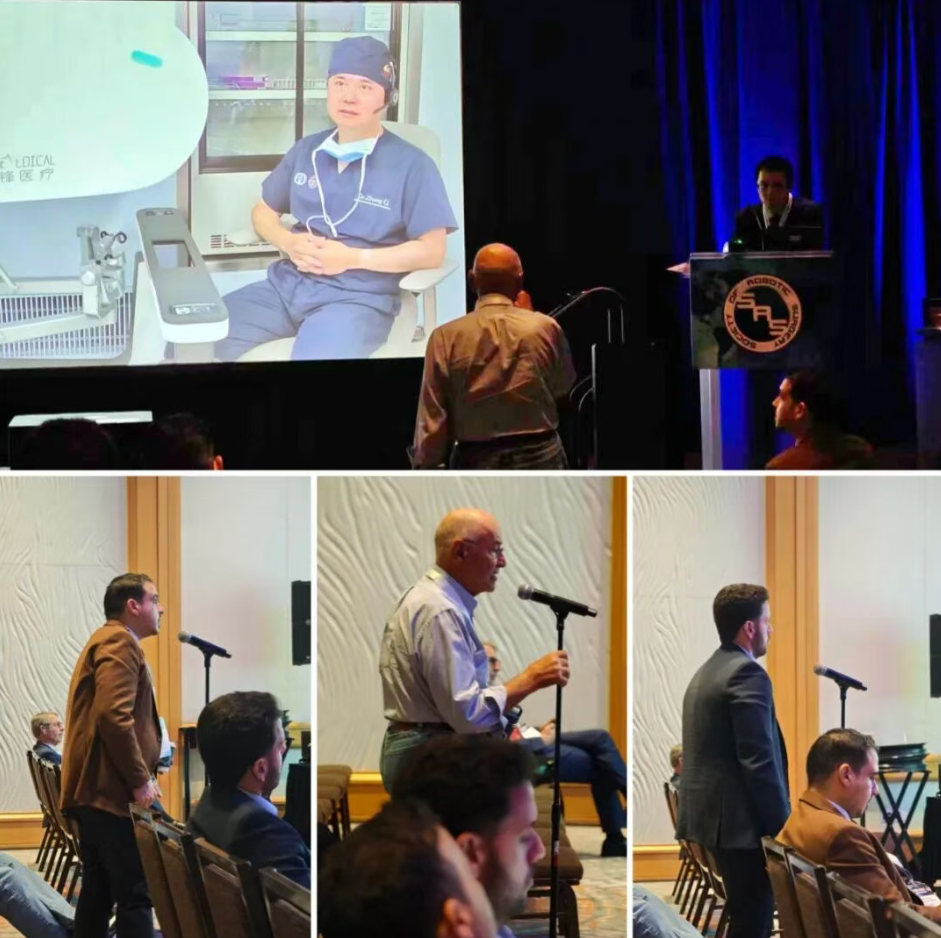
Dr. Zhang and his team rose to every challenge with the confidence that only deep surgical experience can provide. Operating the Edge system, the team moved through each phase of the procedure—bladder neck dissection, seminal vesicle mobilization, Denonvilliers’ fascia separation, and distal urethral preparation—with remarkable efficiency and precision. Despite the extensive resection required by the high-risk disease, the team maintained exceptional bleeding control. Each anatomical plane was identified cleanly, each structure was handled with care, reflecting the kind of mastery that robotic-assisted surgery enables when surgeons and technology work as one.
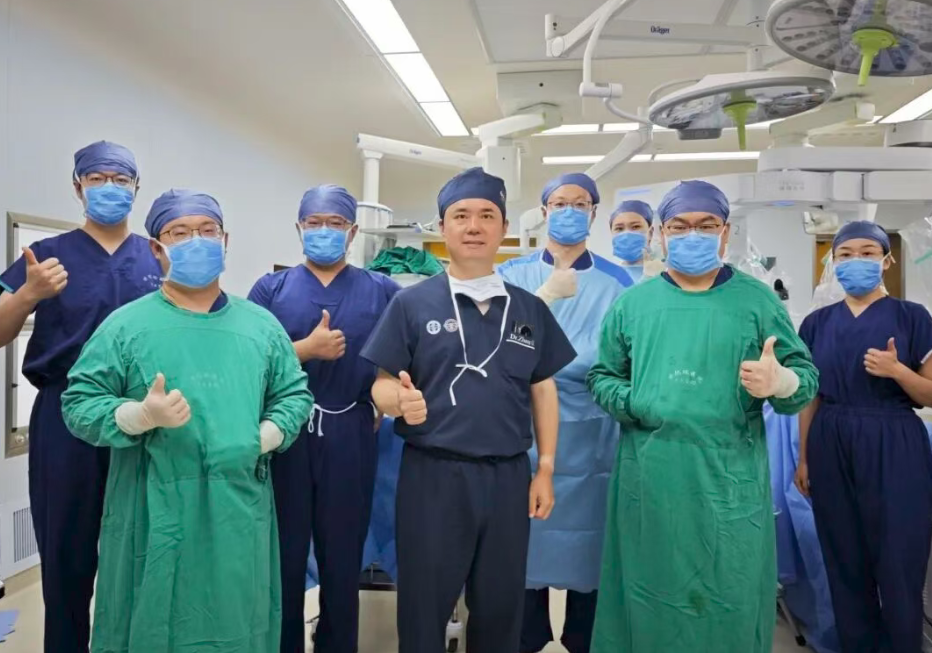
The urethrovesical anastomosis was a defining moment. Dr. Zhang performed a beautifully standardized, elegantly efficient suture technique that achieved a true zero-tension anastomosis—the kind of reconstruction that fundamentally transforms a patient’s recovery trajectory and urinary continence outcomes. The demonstration earned unanimous admiration from the live audience and online viewers. When an anastomosis is performed at this level, patients feel the difference in the days and months that follow.
At every critical moment, the Edge system supported the surgical team with capabilities that matter in the most confined spaces. The system’s high-definition 3D optics and articulating camera delivered clear, multi-angle views into the narrow plane of Denonvilliers’ fascia, empowering the surgeon to visualize and preserve critical anatomical layers. In the suturing phase, the wristed instrumentation of the Edge platform provided the flexibility, grip stability, and multi-directional articulation needed to complete a flawless reconstruction. This is what happens when an intelligent surgical ecosystem is designed with the realities of complex pelvic surgery in mind—precision becomes consistent, and patients benefit from every technological advance.
Advancing the Future of Robotic Surgery Through Platform Innovation
The Edge “3-in-1” Ecosystem: Multi-Dimensional Value for Hospitals, Surgeons, and Patients
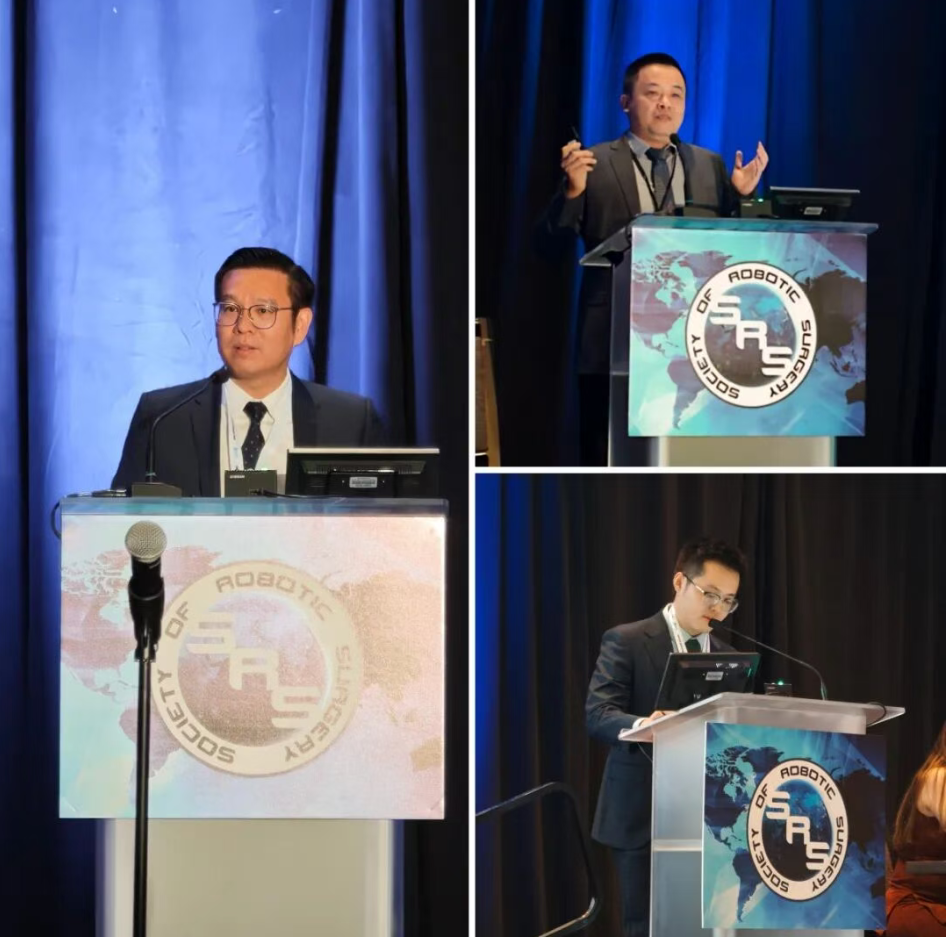
Beyond the live surgery, Edge Medical delivered three in-depth presentations that articulated the company’s integrated vision for the future of minimally invasive care. Together, these sessions explored the clinical, technological, and economic dimensions of the Edge “3-in-1” surgical platform—a unified ecosystem designed to accelerate the global adoption of robotic-assisted surgery across urology, gynecology, general surgery, and thoracic surgery.
Mr. Yang Yong, President of International Marketing at Edge Medical, delivered a keynote titled “Opening the Path to Widespread Adoption of Robotic Surgery.” His presentation offered a forward-looking analysis of the breakthrough innovations within the Edge platform and the growing body of clinical evidence from deployment sites across Asia, Europe, and beyond.
Yang addressed a critical question facing the global surgical community: what truly stands between robotic surgery and its full potential? His analysis identified four interconnected barriers—capital efficiency, surgeon training pathways, procedural expansion, and cross-regional collaboration—and argued that the next frontier will be won not by individual devices, but by platforms that connect and scale across all four dimensions.
The Edge “3-in-1” platform is the world’s first regulatory-approved surgical ecosystem to integrate multi-port, single-port, and remote surgery capabilities on a single technology base. By unifying these three modules, Edge Medical addresses the real-world economics and clinical needs of hospitals and health systems. Financially, a single platform investment eliminates redundant procurement across departments, significantly reducing total cost of ownership. For surgical training, a consistent user interface and shared operating logic shorten the learning curve and support faster credentialing. Clinically, multi-port and single-port capabilities complement one another across the full spectrum of minimally invasive procedures. And through the Edge Cloud remote surgery system, expert surgeons can mentor colleagues across institutions in real time—extending world-class surgical care to patients in communities that need it most.
“The future of robotic surgery is not about machines replacing surgeons,” Yang told the audience. “It is about platforms empowering surgeons to deliver better outcomes for every patient they care for.” This vision—clinical, human, and global—guides every step Edge Medical takes toward making robotic-assisted minimally invasive surgery a standard of care that is accessible, affordable, and scalable.
From Live Surgery to Global Impact—The China Solution on the World Stage
Writing the Next Chapter of Minimally Invasive Surgery Together
Live surgery is the most transparent test of any surgical technology. There is no editing, no margin for error—every movement, every decision, every outcome is witnessed in real time by the global surgical community. In recent years, Edge Medical has consistently stepped onto this stage alongside world-leading surgeons, participating at the highest level in premier robotic surgery forums—CILR, ERUS, DRUS, and now SRS—each time delivering complex, zero-complication live demonstrations that speak directly to the clinical maturity of China’s surgical robotics.
At SRS 2026, Edge Medical did more than perform a textbook-quality procedure. Through a coordinated program of live surgery, clinical presentations, and platform demonstrations, the company contributed meaningfully to the international dialogue on how robotic-assisted surgery can advance—not just technologically, but in ways that improve outcomes, expand access, and earn the trust of patients and physicians everywhere.
From the operating room to the conference hall, from clinical evidence to ecosystem strategy, Edge Medical is advancing from product innovation to standard-setting. Our commitment is clear: empower surgeons with intelligent platforms, improve the lives of patients with every procedure, and work alongside the global surgical community to ensure that the benefits of minimally invasive robotic surgery reach more people than ever before. That is the future we are building—one surgery, one surgeon, one patient at a time.

